Tablet at the throw line
Your instructor or the throwers themselves tap where each axe landed. First names, teams and turn order are handled on screen.
A tablet at the throw line, a projector above the lane. PolyTarget turns your existing targets into game screens. No sensors, no new boards, nothing changes on your walls.
Install takes an afternoon, not a renovation. Your boards, your throwing distance and your safety setup are exactly what they were yesterday.
Your instructor or the throwers themselves tap where each axe landed. First names, teams and turn order are handled on screen.
The projection mirrors the tablet onto the real target. Every throw flashes its verdict in the middle of the board, in front of the whole group.
No sensors, no cameras, no replacement boards. The game geometry is drawn in real millimetres and lines up with a standard 600 mm target.
Scoring games for the competitive ones, board games for the tacticians, party formats for the birthday crowd, co-op for the team building. Each one shows an estimated duration before it starts.
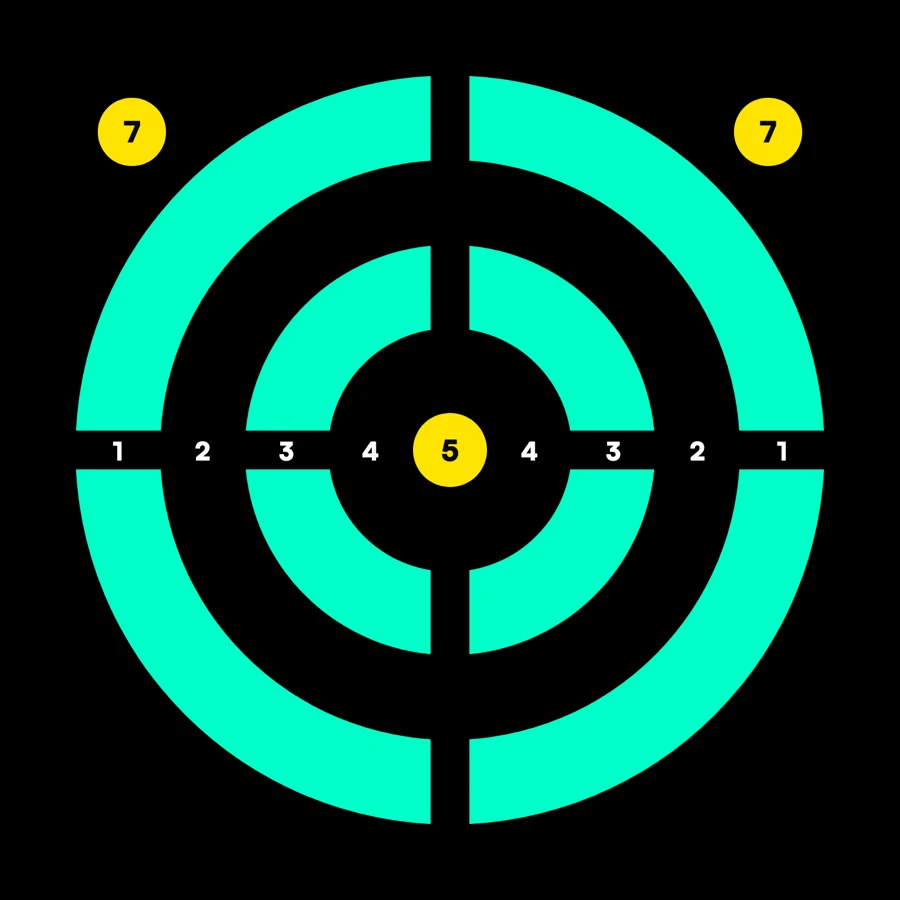
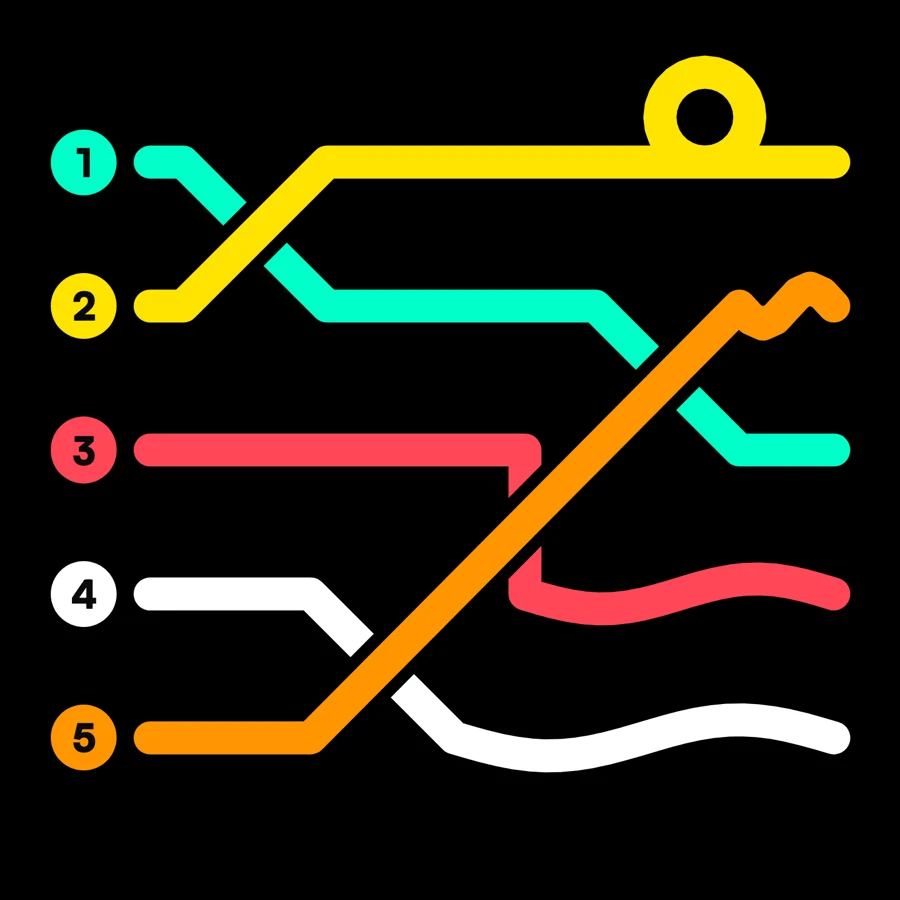
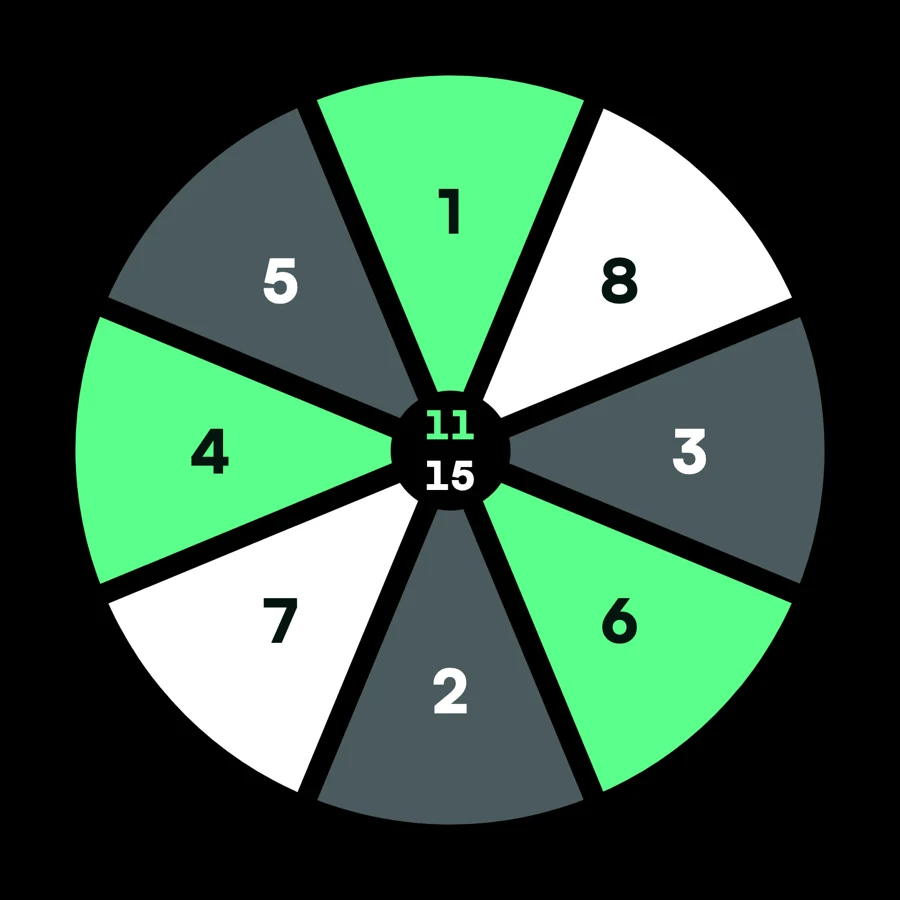



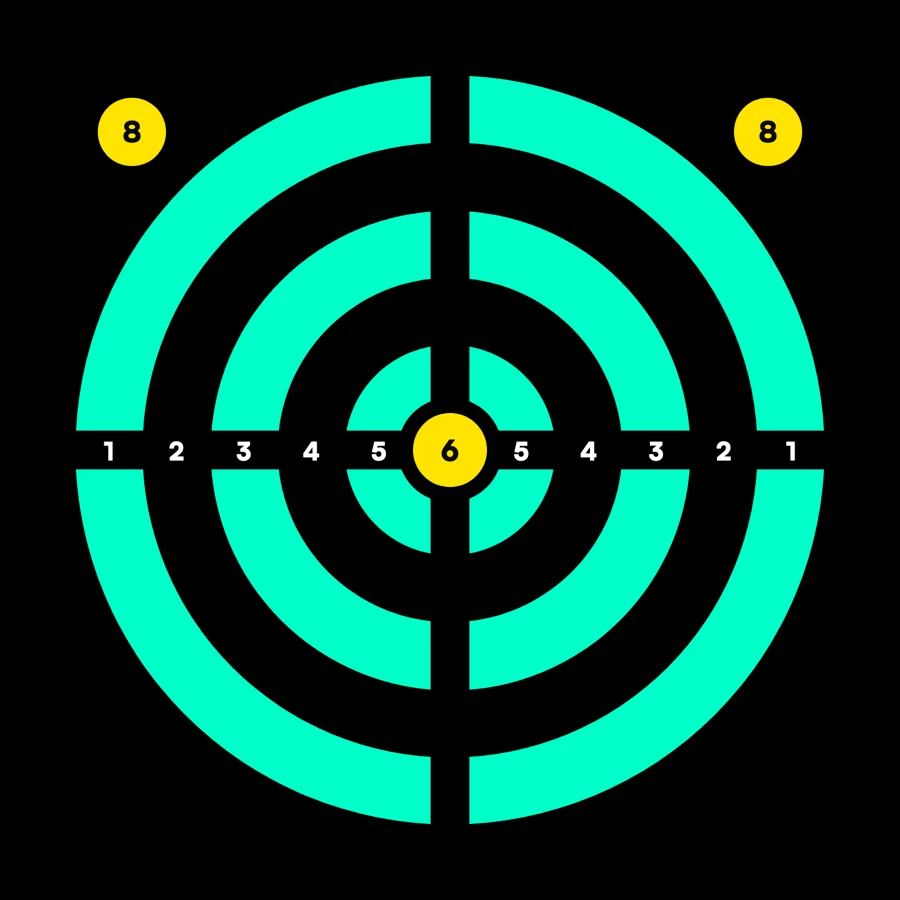
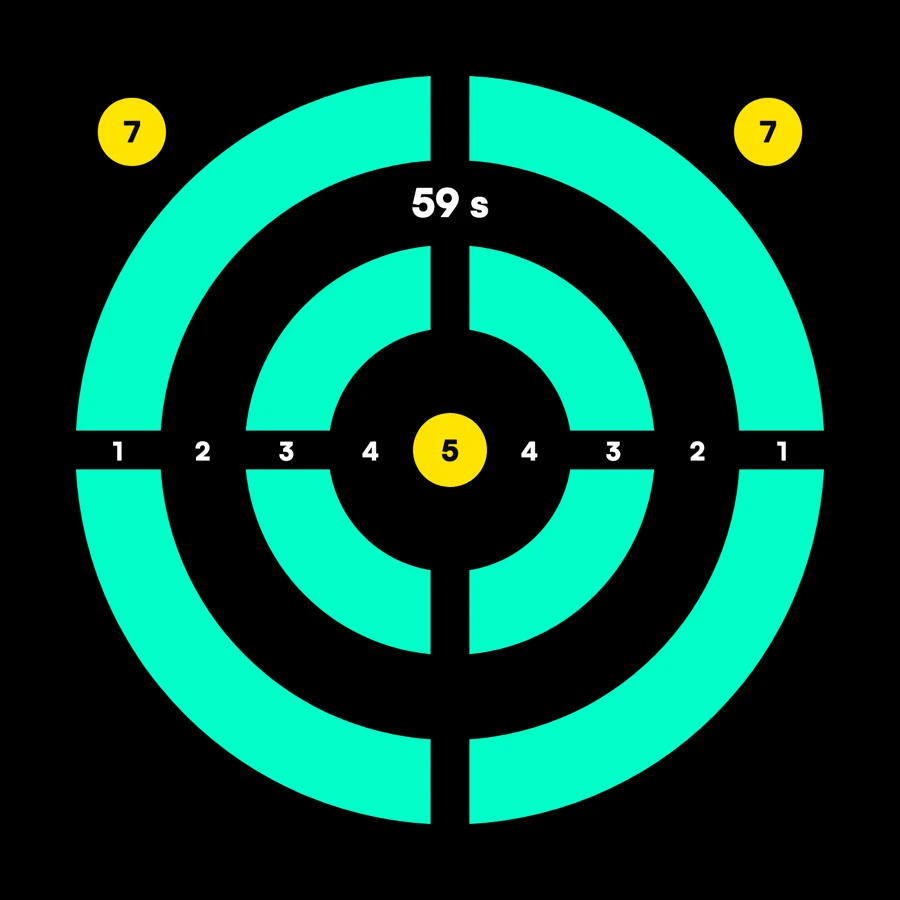

WATL scoring: bull 5, rings 4 to 1, killshots at 7, called before the throw. Two difficulty levels.
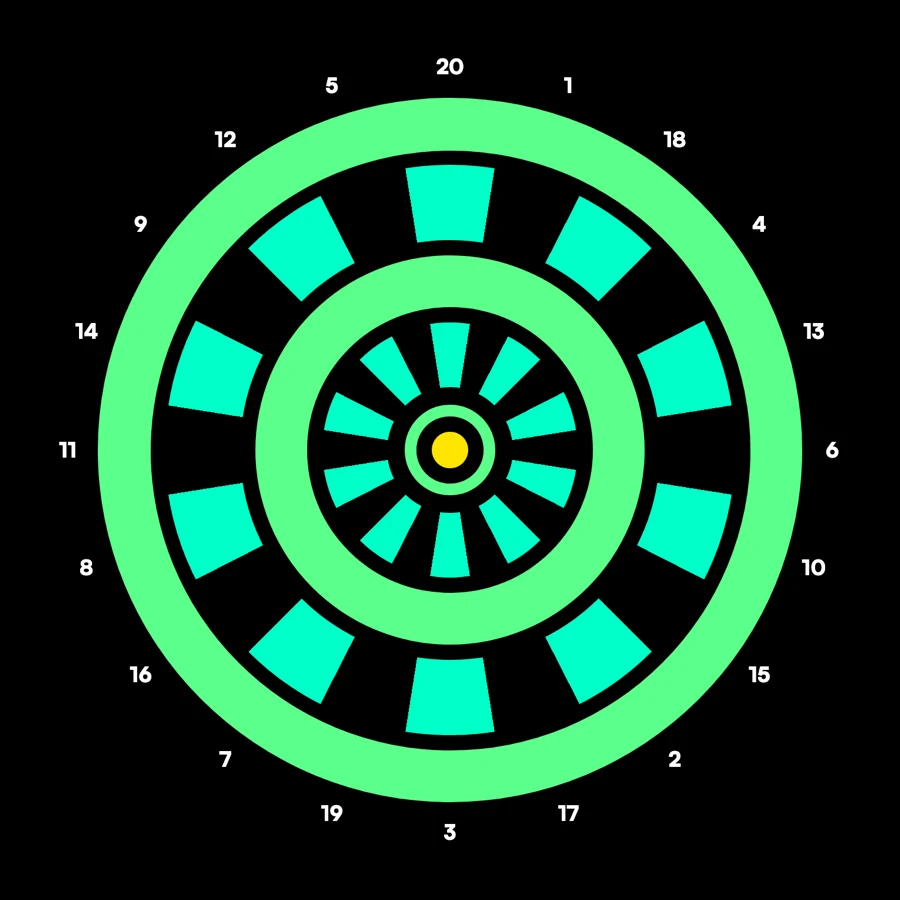
A real 20-sector dartboard on the target: doubles, triples, bull at 25 and 50.
Race to exactly 21. Go over and you drop back to 13.
Call your zone out loud before you throw. Contract kept, points doubled.
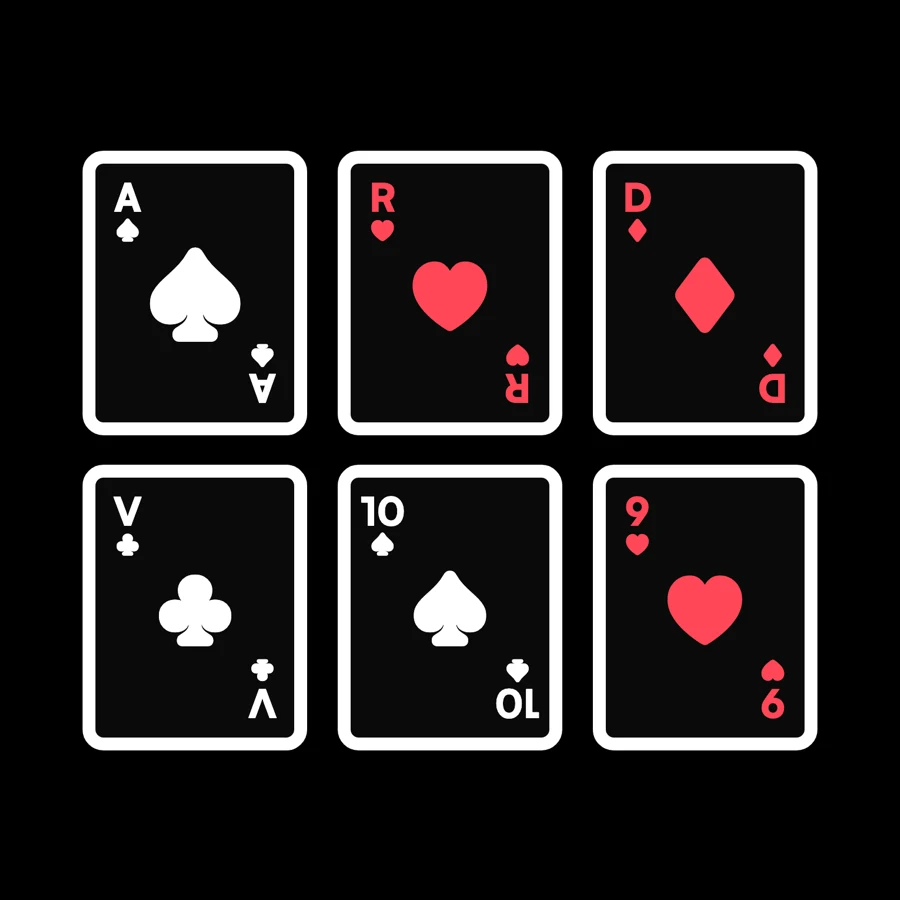
Five throws build one hand. Real cards, real showdown at the end.

Straight elimination. The scoring zone shrinks from 250 mm down to 25 mm.
60 or 90 seconds per thrower, non-stop. This is the one people film.
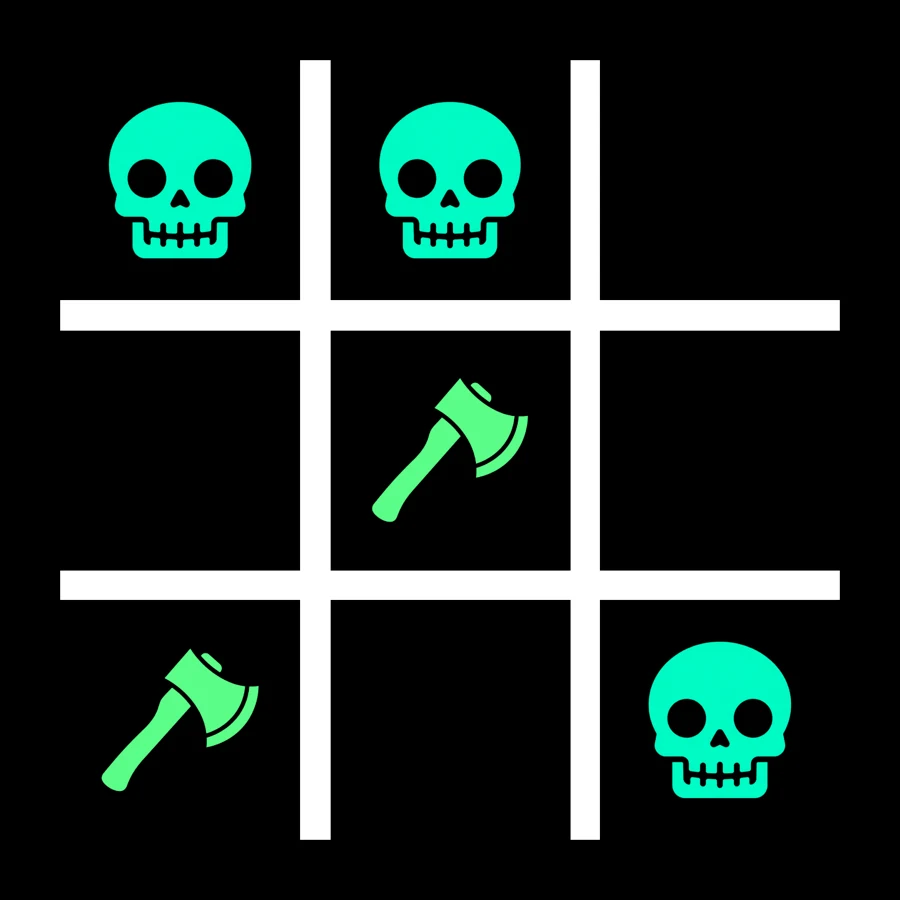
Take a square, or steal one back from the other side.
A 5×5 grid. Hit a column and the token drops, exactly like the real thing.
Two camps, hidden fleets on the board. Hit, miss, sunk.
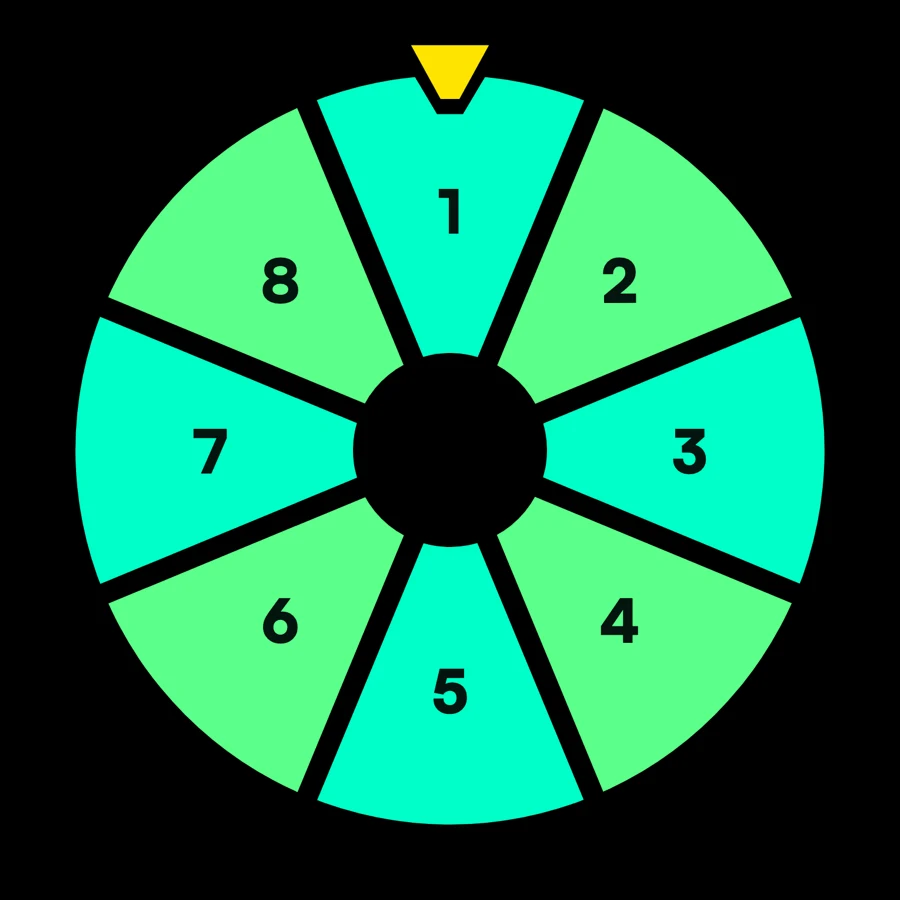
Eight sectors to conquer, and to steal from the other team.
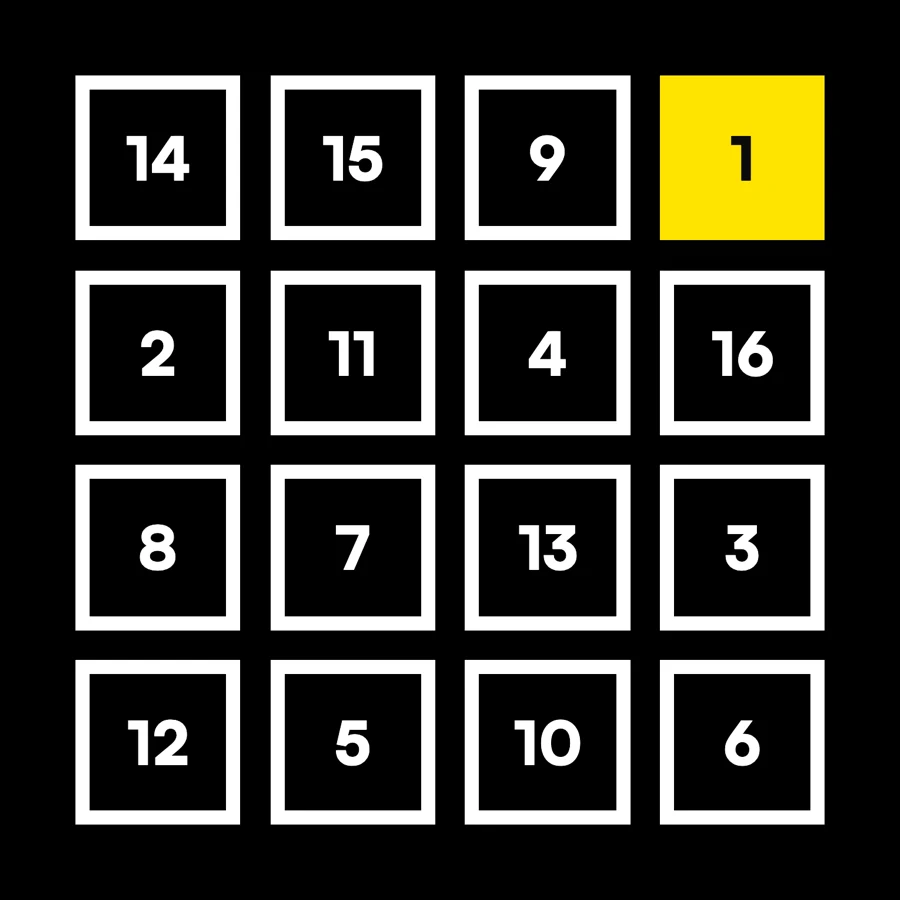
Numbers 1 to 16. Squares can be stolen. Four in a row wins.
A 4×4 board: seven pairs to find and two traps to avoid.
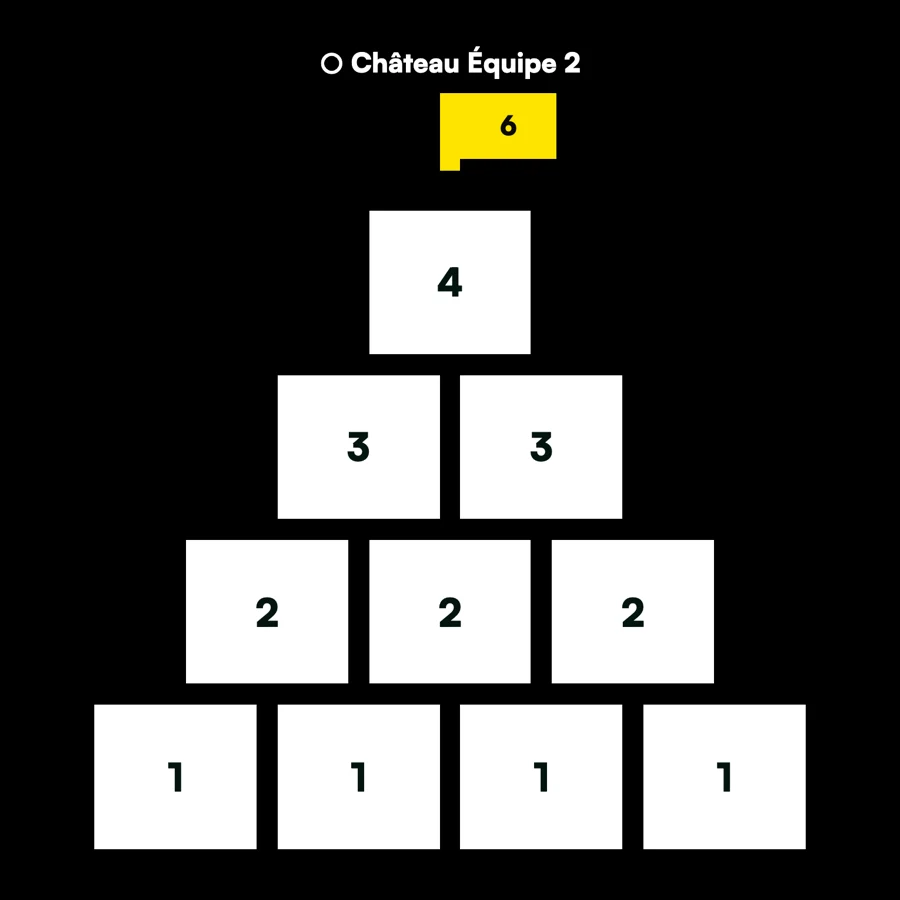
Two camps. Flatten the other castle. Blocks collapse when they lose support.

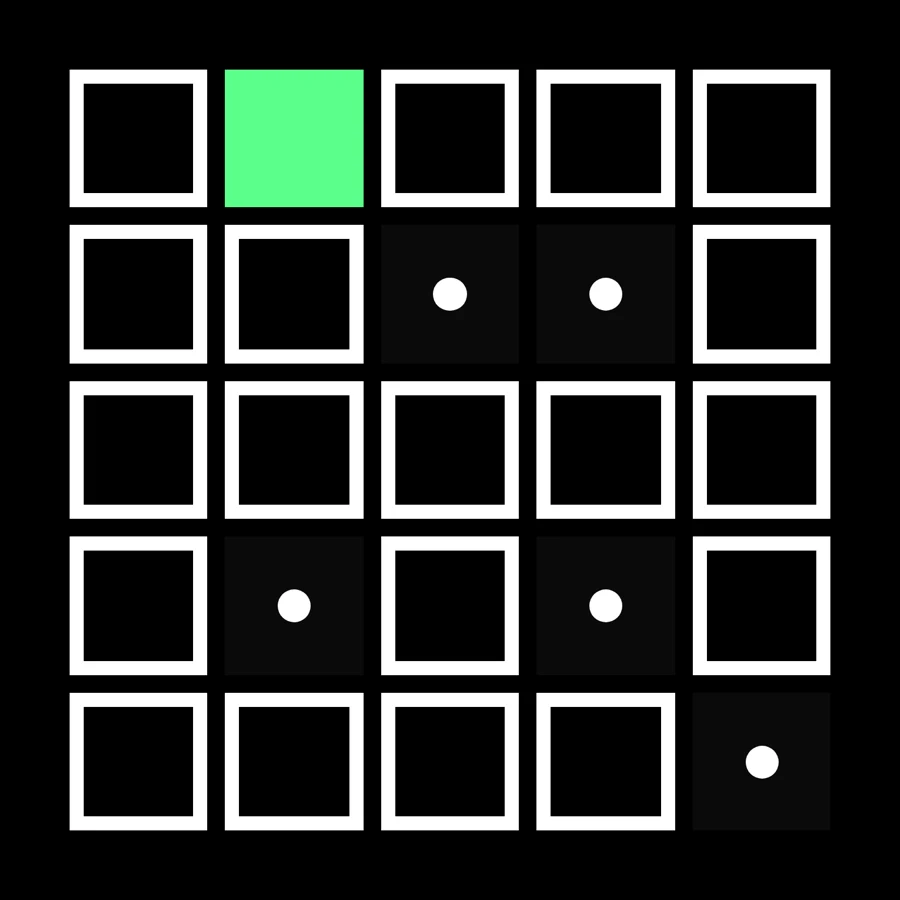
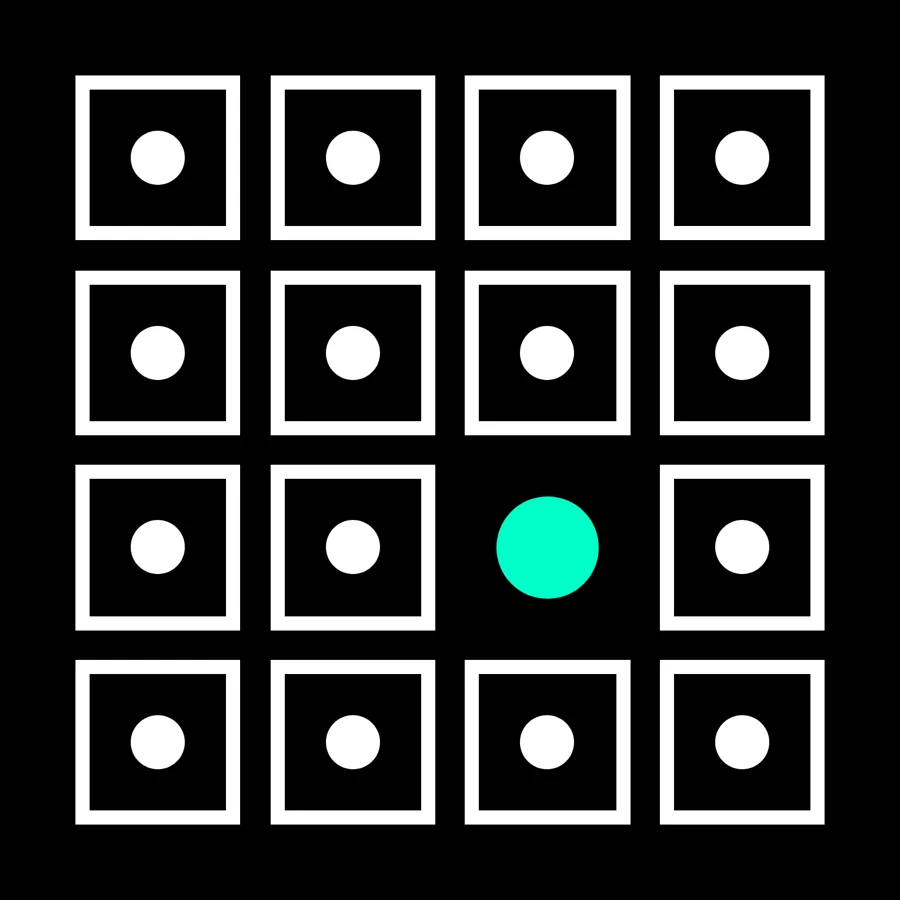
One dot that teleports across the board. First to the target number of hits.
Your customers' own photos become the target: the colleague, the boss, the ex. Sent from their phone, moderated by your staff before anything reaches the wall, unlocked with the room code. Under a minute of instructor time.
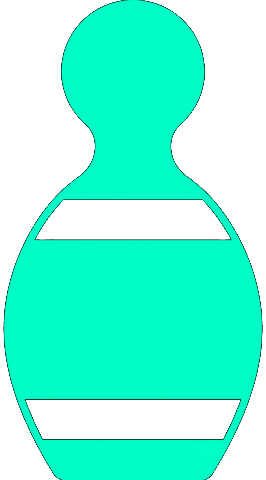
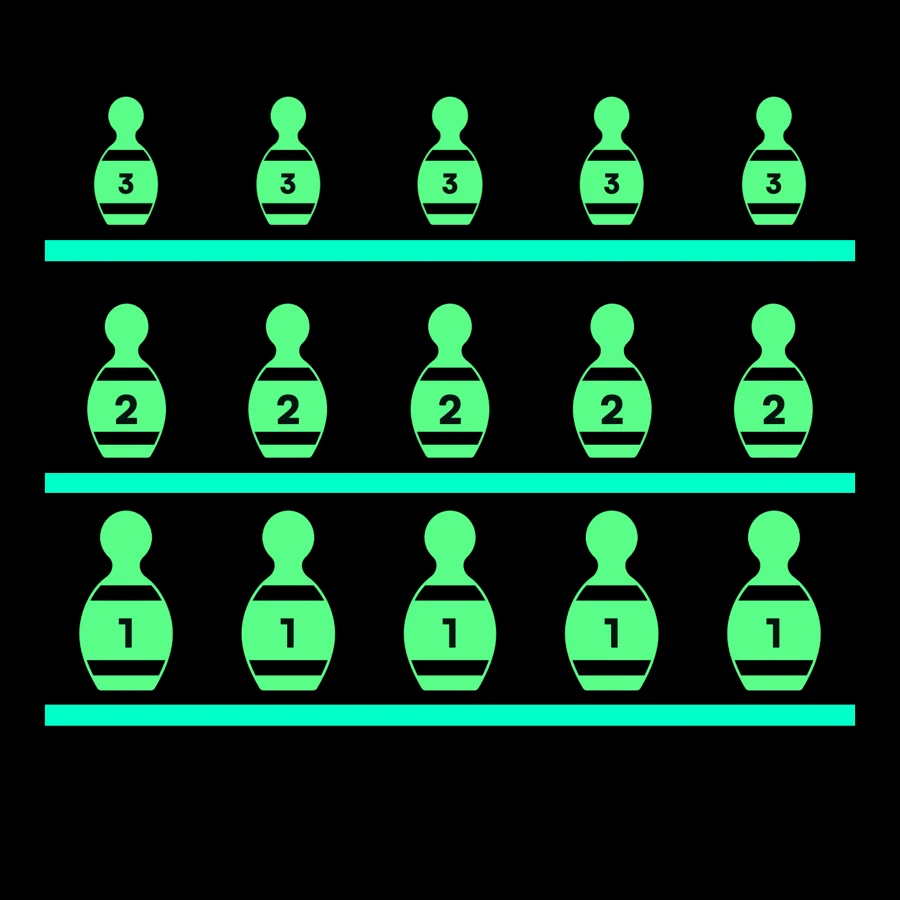
Fifteen pins on three shelves. Racks stay standing between turns.

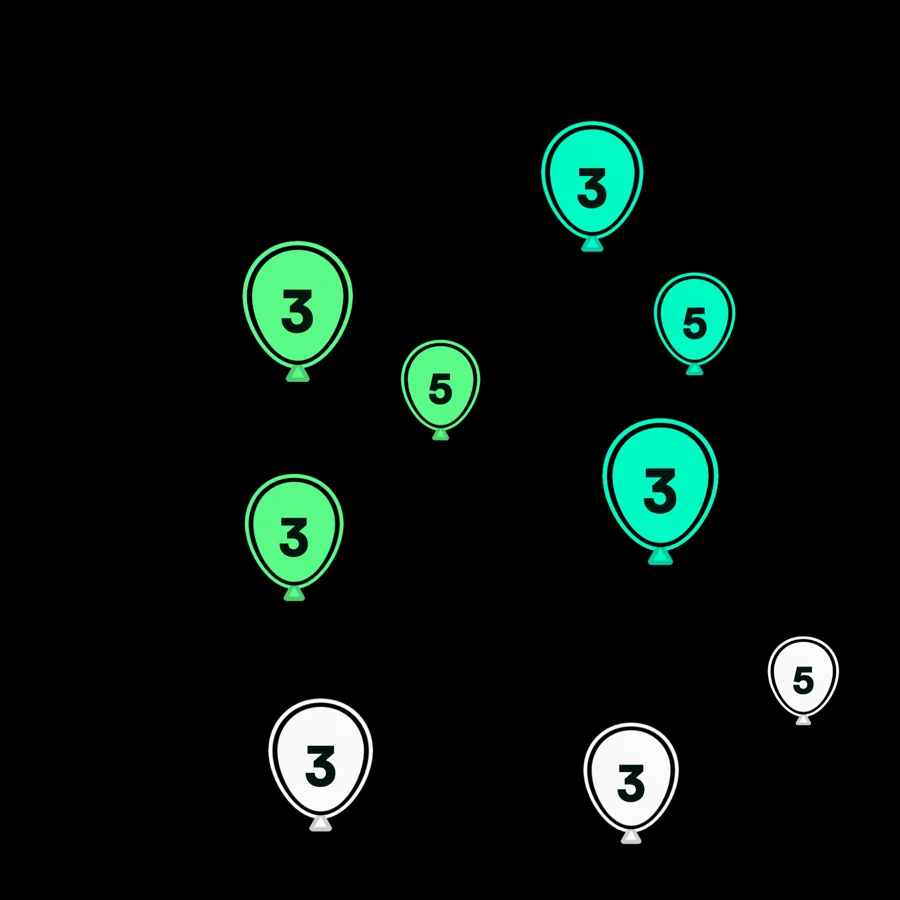
A scattered volley across the board. The small balloon pays the most.
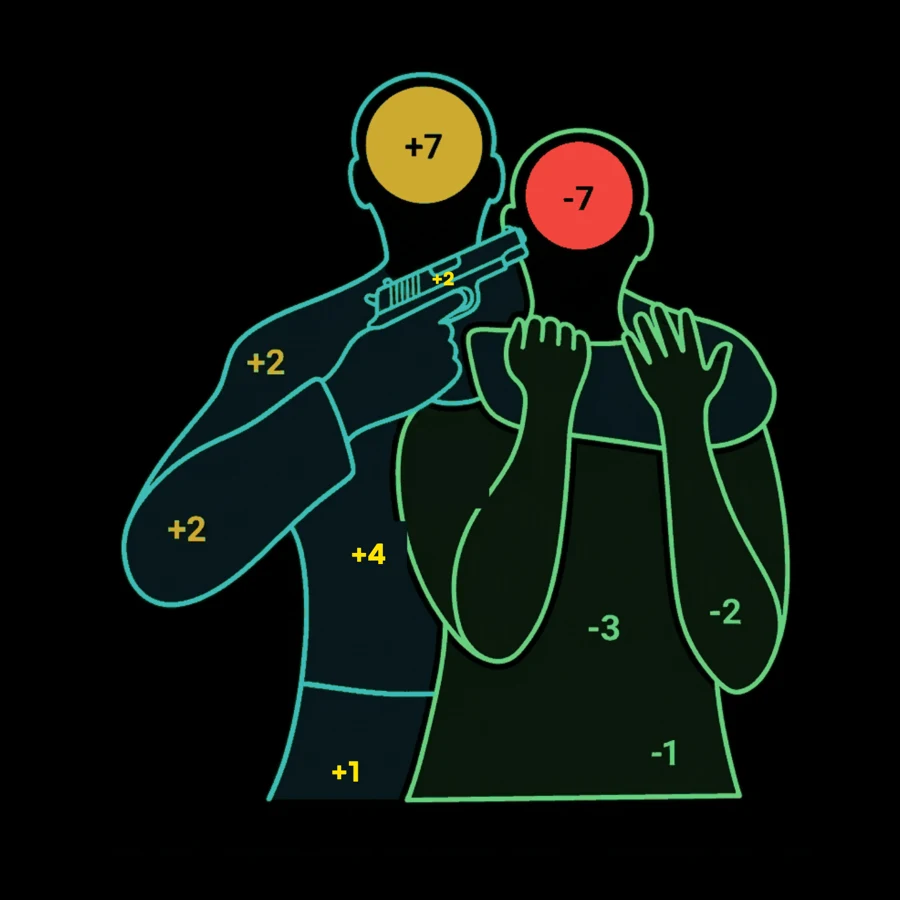
Hit the taker, spare the hostage. Your score can go negative.
The planted axe is the needle. Eight social forfeits: wrestler entrance, live commentary, trash talk.
Cut the cables in the right order. Alarms trigger, and the throw budget is limited.

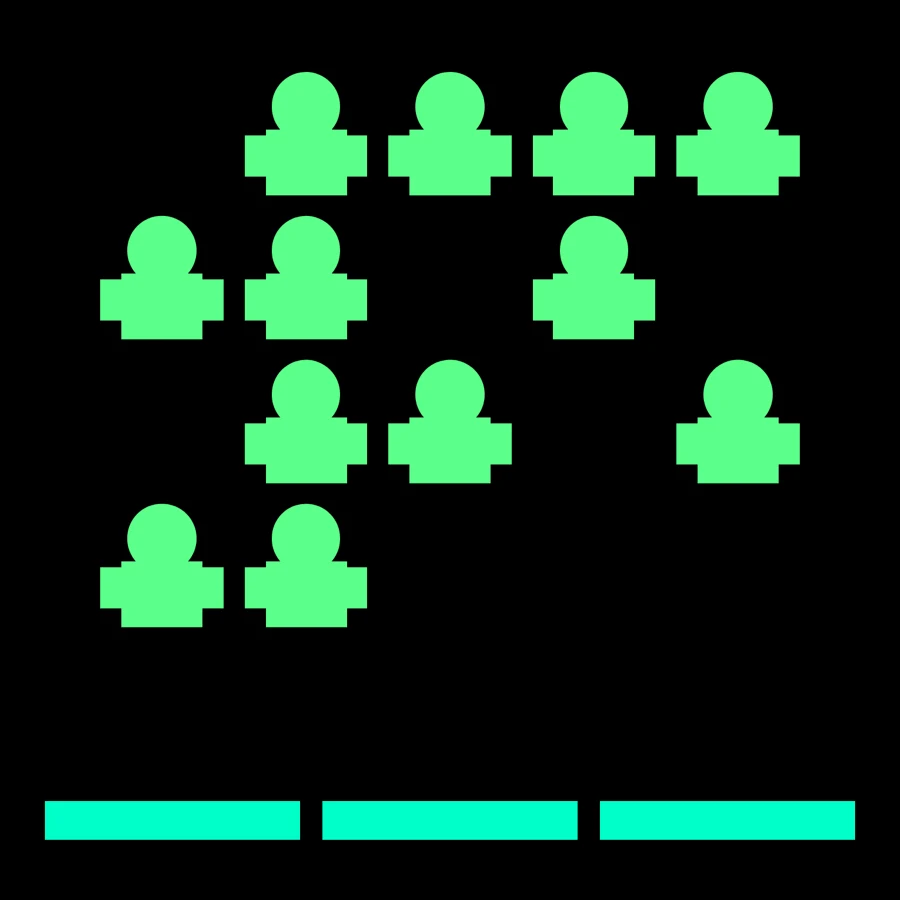
Waves of monsters come down the board. The group holds the barricade together.
22 games today. The catalogue keeps growing, and new games arrive on the tablets you already have.
Bright rooms, ageing projector lamps, light wood boards, groups three to five metres back with a drink in hand. Every decision was made against those conditions.
Two to six players, free-form first names, automatic teams, turn by turn. The estimated duration is shown when the configuration is picked, so your staff can plan the rotation.
Geometry in real millimetres against a 600 mm target. Flat color blocks, no hairlines, no thin type. The palette is tuned for light wood, tired lamps and ambient bar light.
Automatic punchlines fire on streaks, misses and killshots — trash talk projected on the board. Every throw flashes its verdict at the centre of the target.
The game is not only entertainment on the wall. It sells an option, extends sessions, asks for the review at the right moment, and hands you a customer file at the end of the night.
A paid add-on you price yourself. The group sends photos from a phone, your staff moderates every image before it is projected, and the room code unlocks the mode. Less than a minute of instructor time per group.
At 20 minutes before the end, the game screen offers the extra hour by itself. No one has to remember to ask, and nobody gets interrupted mid-throw.
A permanent review button, a prompt at 15 minutes before the end, and a giant QR code projected on the target. You ask while the group is still laughing, not by email three days later.
Per-player stats — throws, points, best throw, hit rate — plus titles the group argues about. Players opt in with their email to get the recap, and your customer file grows on its own.
A companion web app for the operator, in the same neon look as the game. Session history per venue, the customer file built from the opt-in emails collected at the end of sessions, CSV export, secure login.
Born on the lanes. Not in a demo room.
PolyTarget was developed on site with Les Frères Jacks, an axe throwing network in France. It runs there in daily production, on real sessions, with real groups and real staff.
That is where the throw budget, the tie-break rule, the room code and the every-other-ring contrast come from. Each one answers something that happens in a real room on a Saturday night.
Tell us how many lanes you run and where you are. We will show you the tablet, the projection and the dashboard, and answer the practical questions about your room.
Or write directly to contact@polyma.ai